
The Intersection between Ethics and Esthetics
Or, Notes from Two Pretty People Chatting



Hello beautiful people! Today, I’m interviewing the one and only Ivana Esther Martínez on the topic of ethical skincare. More specifically, we’re covering what consumerism as a vegan looks like, ingredients in skincare to be mindful of if avoiding animal products, what a balanced diet can do to help & hurt one’s skin and last but not least, some recommendations! The wealth of wisdom that Ivana has gracious shared with us is too vast to be contained in an email so please read the full piece on Substack.
I think it’s important you, my lovely reader, understand our backgrounds so the context of our dialogue is understood better.
Ivana: I am a writer and licensed facialist in the Washington D.C. metro area. My publication, Venus of the Mind, is a newsletter membership designed for lovers of beauty and culture; for readers who like to look good and think deep.
Inside the newsletter, readers explore the world through aesthetic philosophy, (a)esthetics as a profession, and aestheticism as a way of life. Every month, subscribers get to go where reels, tiktoks, vlogs, and AI can’t: straight to the heart of desire that drives us toward the pleasure and pain of everything beautiful.
In addition to my newsletter and esthetic studio practice, I have other creative projects in the works for 2026. Subscribe and experience the adventure!

Carrington is a lover & an artist devoted to sharing wisdom on harmonious living. Through her work, one is invited to forage their inner forest on how their values and ethics align and are expressed in daily actions. She openly expresses her philosophies on motherhood, food, and being spiritually connected to nature & beyond. You can connect with her through savoring a dessert from her vegan bakery Chanterelle Cafe or by subscribing to this publication. The more important detail to mention about Carrington is that she has been vegan for 10 years with a background in nutrition, wellness, and mindfulness practices for 15 years.


What is the first thing that comes to mind when thinking about the intersection of ethics and esthetics?
Harm reduction, soft power, rituals of belonging, communal histories, and collective futures. I believe that the centuries-long cross-cultural history of veganism offers a meaningful lineage for how to live in a world that needs more humans collectively focused on harm reduction. While not a vegan myself, I’ve previously written about veganism as an influential framework in how I approach cultivating experiences of beauty in my own life. It’s one of my most popular culture essays so far: Thinking in Richmond.
Let’s talk about making informed purchases. As a vegan, I’m first and foremost looking for that leaping bunny or certified V symbol on my packaging. I’m simply not buying even the highest rated face cleanser if it’s not vegan. However, I’ve come to learn that not all vegan brands are well formulated necessarily. What have you noticed in the market and in your practice when it comes to creating good quality vegan skincare products versus non-vegan ones?
Generally speaking, in the last decade the Western beauty industry model of cosmetic production has shifted away from animal testing and animal derived ingredients in skincare. Especially at the level of production that’s giving us elegant, efficacious, clinically backed cosmetic skincare formulations. For example, lactic acid which one would assume is dairy derived, is actually most commonly a lab-derived synthetic. Pick up any product in your skincare line-up and it probably has lactic acid in there. Either as an active exfoliating ingredient, an humectant to draw and bind moisture onto the skin, or at a small percentage as a stabilizing agent/preservative. It’s so versatile, it’s everywhere in skincare. I mention this ingredient because it’s the one I most often get questions about from vegan clients or clients with a dairy allergy/sensitivity.
When developing a high-performance exfoliant or moisturizer with lactic acid, it would be laughable and considered a poor formulation practice to be deriving such a staple alpha hydroxy acid (AHA) from dairy. So uncommon in mainstream formulation standards, that you’d have to go out of your way, like into a MAHA-run boutique shop, to find an outdated ingredient source like that. Right next to the beef tallow I’m sure.
This quick and succinct read from Dieux Skin’s blog gets into the nuance worth keeping in mind when understanding the production landscape that vegan products exist in. Because some of the best skincare products on the market right now are actually vegan and ethically sourced by default since it’s just good business practice.
Some of my favorite brands like, Aypa, Dermaviduals, Dieux Skin, Epicutis, Monastery, and Topicals (every mention is unsponsored but I am 100% ready to work with them👀) they’re entirely vegan and ethically produced due to their formulation plus sourcing practices. Those brands - and more! - are top-tier and values aligned for anyone who cares about harm-reduction plus healing our planet, they’re just not certified.
Of course when a brand goes the extra mile to get that branded “Leaping Bunny” or “PETA-approved” certification, it allows a vegan consumer to shop with peace of mind and that’s important. But simultaneously, I want vegans to know they’re not limited in their beauty shopping options and their moral compass actually is the standard now.

Building off this, what are some key ingredients you suggest people look for that are by design vegan and actually useful for our skin?
I’ll uno-reverse and focus on what you don’t want in your skincare because it’s a shorter list since again, the standard for newer brands is lab-derived and plant-sourced.
Obvious ingredients like beeswax (common), honey (common), silk amino acids (less common but occasionally seen), milk (rare but maybe seen once in a blue moon), all are a NO.
Not so obvious but still pervasive in old school/legacy brand formulas: lanolin, this is wool derived so a NO.
Anything advertising collagen needs to explicitly detailed as plant-derived or else just leave it. But honestly, most topical collagen products are simply not worth the money. I view them as snake oil skincare. Everyone should just SKIP. Instead, protect your current collagen stores by wearing SPF daily. Stimulate collagen production by investing in an FDA-approved, CE certified, clinically tested red light mask. Also, feed your skin from the inside out with mineral rich foods (like cruciferous veggies!), plant-based protein and heart healthy fat sources. Proteins plus fats are some of key building blocks needed to synthesize collagen and elastin production from within.
SqualEne and SqualAne. The latter is a derivative of the former.
Important to know: “Squalene is a colorless poly-unsaturated hydrocarbon liquid that’s found naturally in many animals and plants, including human sebum. Essentially, it’s one of the many natural lipids your body produces to lubricate and protect your skin. Squalene is estimated to make up about 10 to 12 percent of your skin’s oil and is incredibly important to your skin. Unfortunately, because of its efficacy, it’s often harvested in unethical ways such as from a shark’s liver—however, there are other sources. It can be, and is commonly, harvested from plant sources like olives, wheat germ oil, and rice bran. The ingredient comes in two forms: squalene and squalane.” Read more Byrdie here.
Because of the above, pay attention to a brand’s marketing copy. For example, do you see squalene/ane but no clear vegan certification? If the brand uses language like “green”, “botanical skincare”, “clean”, “plant-powered”, “ethically sourced”, or yes even the unfortunate misnomer “chemical-free”, these are helpful when determining if a product is vegan without a certification. Though at this point, in 2026 any brand worth paying attention to will have a clear and direct ingredient index on their website. Whenever I’m doing product research, that’s one of the first website features I look for. It’s a good-faith practice that signals a desire to nurture genuine consumer trust.
A note on the term “chemical free”: I need all the beauties reading this to know, please never forget…water is made of chemicals. Two hydrogen atoms and one oxygen atom to be exact, H₂O. Air is made of chemicals, some we need like oxygen and some we’d rather not have to breathe but take that up with the EPA not me. Every living thing on Earth is carbon based and therefore, made of chemicals - beginning with carbon. The periodic table is a thing. Nothing on this planet is free of chemicals. But marketing is a form of world building (lol!) and there are no rules, so we have a term like “chemical free” which means nothing and yet says everything.
It’s winter where I’m at right now so we must talk about occlusives. Aquaphor is not vegan as it has lanolin, so that’s an easy NO. CeraVe healing ointment is marked as lanolin-free and the brand uses plant-derived ceramides, until recently this has been my preferred occlusive of choice (more on why I’m shifting away from it below). Vaseline is 100% petrolatum so yes, absolutely vegan.
Thinking about the topic of ethics and skincare, it’s important to note that the production of all three aforementioned and very popular occlusives relies on crude-oil extraction. So much of modern life hinges on fossil fuel usage and the beauty industry is not exempt from the claws of oil dependance. Petroleum jelly, mineral oil, paraffin dips at nail salons, all of that and more are made possible by the refinement of crude oil. So yea, that’s a big unsexy Earth harming ICK.
Having eczema since infancy, I’ve spent a good chunk of my life slathered in these old school occlusives precisely because they are effective, research-backed skin protectants that support wound healing and are often recommended even by dermatologists. However, over the past year I’ve been exploring elevated alternatives that are crude-oil free. My latest favorite fabulous occlusive is the Gotu Kola Intense Repair Balm. I am obsessed. It’s so versatile and I often use this as a booster base in treatment when I’m cocktailing masks for clients. It’s cruelty free, has the “V” certification, and is free from crude-oil derivatives. Winning all around!
One exception to my “avoid” list: Glycerin. I have found from cross-referencing on popular vegan beauty blogs, some of their information regarding sourcing standards is outdated. For example, I see a lot of misinformation around glycerin in skincare. Yes, it can be animal fat derived, but when it comes to skincare, it’s in the same category as lactic acid in that it would be laughable to use animal derived glycerin because sourcing from vegetable fat has been the standard for decades. Though again, on ethics and skincare, sourcing practices of glycerin are currently contributing to deforestation so that’s something to consider.
When shopping online, just go right to a brand’s FAQ. If they do not test on animals, and do not use animal-derived ingredients they want you to know (it’s good for business!) and will have it listed usually in the FAQ section. Also, bookmark the following websites: Leaping Bunny and Peta Approved. These are two solid sources for clarity when shopping online though not all vegan brands are listed there, just the one’s that go through their certification programs. I also love the Ingredient Bible from Paula’s Choice, that one is for the skincare nerds.
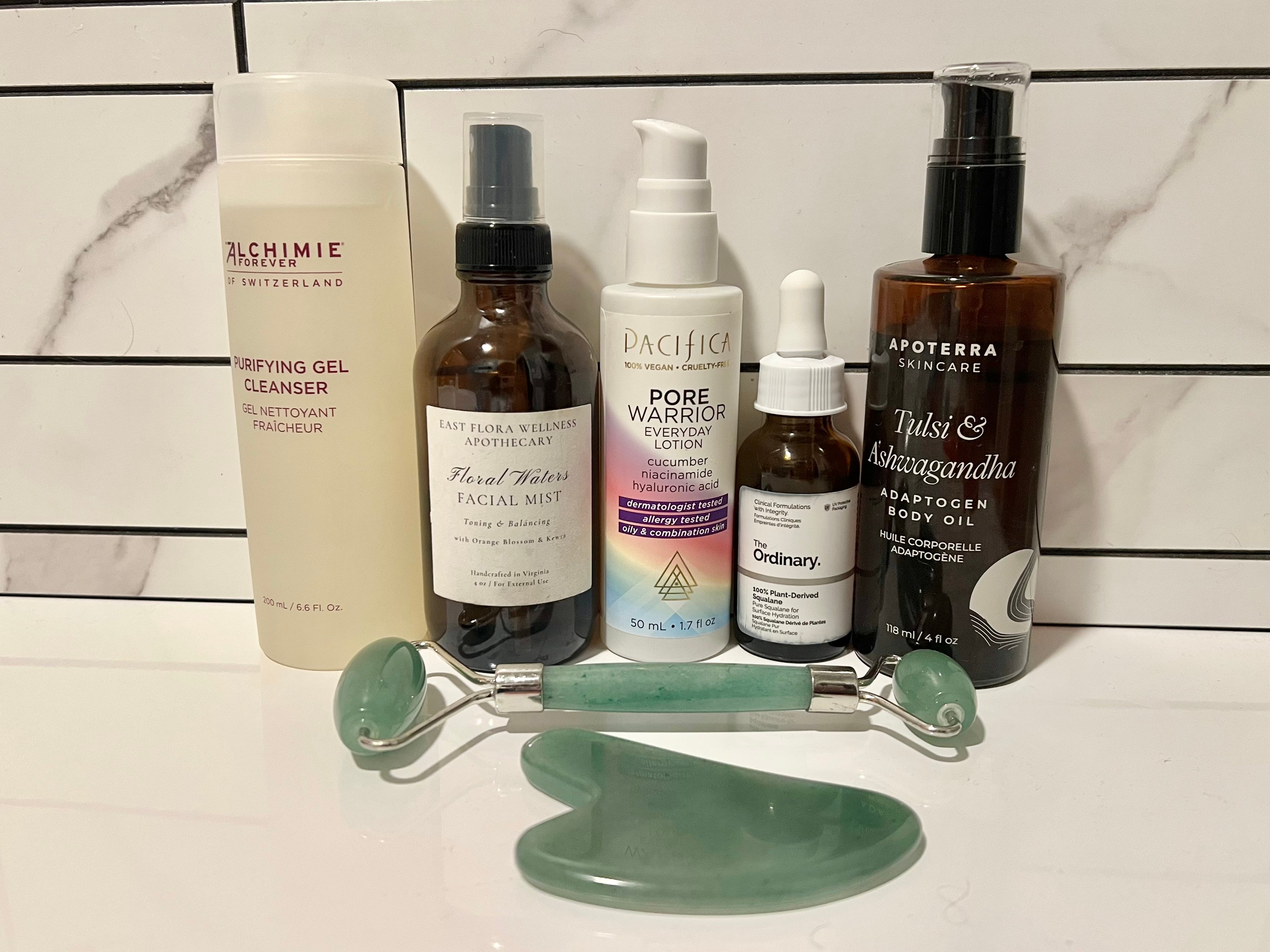
What should one maximize and minimize in their diet that can best support their inner and outer glow?
Love, love, LOVE how you phrased this question.
First before I can answer, it is important that I clarify my scope of practice. I am a licensed master esthetician whose specialty service is facials, ie: a facialist. Within my scope I can assess topical conditions, treat the outermost layer of skin, support aesthetic goals, customize skincare plans, and redirect to other professionals as needed. Heavy on that last part of redirection because I cannot diagnose diseases nor prescribe, that’s the purview of a dermatologist.
Our skin has three layers, the epidermis, dermis, and hypodermis. Each layer has its own sublayers. My scope of expertise – which I am licensed to treat – is the epidermis. The epidermis is the outermost layer of skin; it has five sublayers within it. Despite being a first line of defense while out and about in the world, the epidermis is our thinnest layer of skin. A paradox!
All of that is to say, I am not a registered dietician. What I am about to share regarding food and the skin is what I have learned from years of supplementary self-study to support my work with the epidermis and to support my clients (and myself!) in making aligned choices that influence whole body health. Those choices, of course, show up in our skin as the skin is the human body’s largest organ.
Back to your question: fibrous carbs, high quality proteins, and heart-healthy fats are all THAT GIRL. The holy trinity of cellular support for everything our body does to function and that includes supporting the quality of our skin and its regeneration overtime. When it comes to balancing dietary choices, as a general rule of thumb I like to say, “If it makes you feel like crap it’ll make your skin crack!”

What are your predictions concerning the future of skincare? More beef tallow or less? lol
I’ll start with the second question first - LEAVE THE COWS ALONE! The wildest extractions I’ve done last year were all on new clients coming in wondering why they had developed persistent blackheads after never having delt with them prior. Every single one had recently hopped onto the tallow train. If you wouldn’t want it clogging your arteries, why are you using it to clog your pores?
Since I’m on my soap box, I’ll get in one more screed - LEAVE THE FISH ALONE TOO! I’m not a fan of the salmon sperm trend. Salmon PDRN (Polydeoxyribonucleotide) is the latest shiny object to come out of the K-Beauty behemoth (this link is a very good read on beauty as a tool of soft power politics).
Clearly, I’m not jazzed. Why hype the injection of salmon derived ingredients into skin when there are already loads of other in-clinic medical services that promote wound healing, boost collagen production, and stimulate A2A receptors, all without contributing to overfishing and industrialized aquafarming?
Speaking of trends, back to your first question. My predictions for skincare…when it comes to the future of skincare as it pertains to markets, I have no idea. I am not in the business of beauty industry forecasting. I am in the business of skin whispering.
In my personal practice as a working facialist, I see the future of skincare as ancient. What will matter long term is what has mattered since the beginning of our species but long before we even put language to it: lymphatic flow, a balanced skin microbiome, and approaching the skin first and foremost as an organ of protection that is in constant communication with our nervous system (central and bilateral); regulating everything we experience across the spectrum of pleasure to pain and safety to fear.
Every person is a distinct universe housed within a marvel of evolution. I believe skincare offerings should honor that marvelousness. In my little sliver of the world out here in Northern Virginia, inside Ivana Martínez Studio what will always be relevant is tailored and timeless skincare.

Product Recommendations!
YESSSS!
I’ve customized two sets of recommendations.
Profile one is tailored to someone who is combination to oily with a tendency towards breakouts, possibly also dealing with dullness and a lack of hydration during winter.
Profile two is tailored to someone who is dry and easily sensitized, maybe also dealing with dullness plus lacking in both hydration and oil throughout the winter.
Nothing mentioned is sponsored so links are not affiliated. Everything has been thoroughly vetted as vegan.

Profile One
Cleanser
Dr. Loretta Gentle Hydrating Gel Cleanser
Single cleanse in daytime as needed with this only. Always double cleanse at night, starting with oil.
Serum
Moisturizer
SPF
BYOMA Ultralight Face Fluid SPF 30
Leave SPF off at night and you have a PM routine.
Profile Two
Cleanser
Dermalogica Ultracalming Cleanser
Single cleanse in daytime as needed with this only. Always double cleanse at night, starting with oil.
Mist
Serums
Moisturizer
SPF
BYOMA Moisturizing Gel-Cream SPF 30
Leave SPF off at night and you have a PM routine.
Thank you for the invite Carrington!
This was so fun, it felt like chatting over voice notes! 💛🫂💛

Massively thank you to the one and only Ivana!!! Don’t forget to subscribe to her newsletter Venus of the Mind and join the waitlist for a bespoke facial experience at Ivana Martínez Studio. Please share your thoughts with us via email, comments below or on other social channels.
I will see you next month for the next issue of Collectibles and another special essay. Until then, take care!
 | A guest post by
|
Love this dialogue. There are so many great recommendations here!